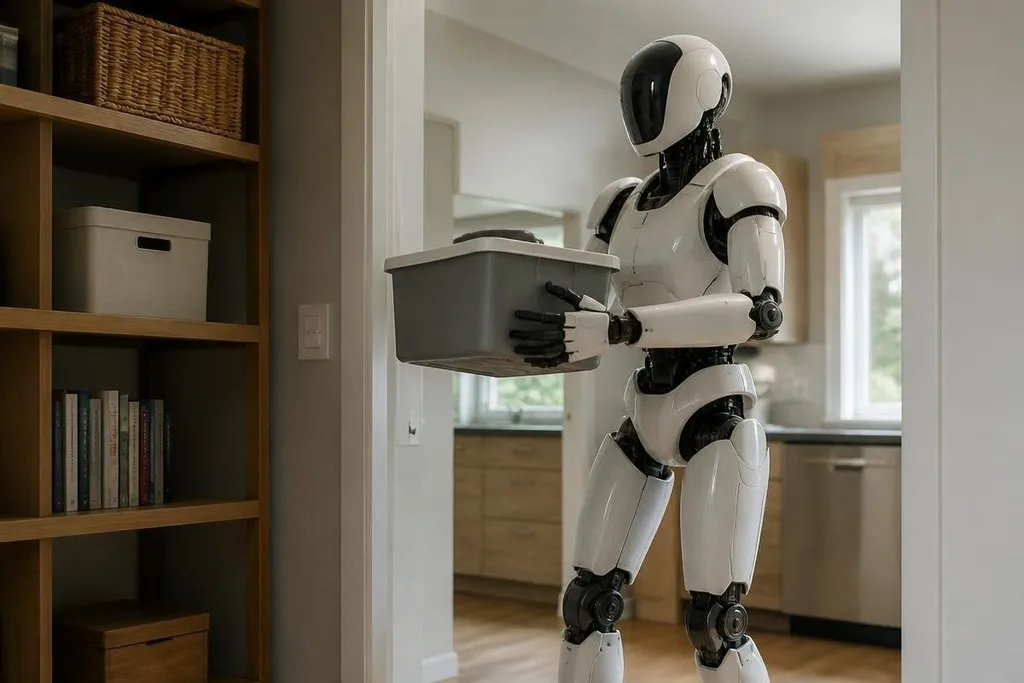
A humanoid robot has two arms, two legs, hands, and a body built around human spaces. That shape could let one robot use doors, shelves, tools, and stairs made for people, but it doesn't make household work easy.
This article looks at where that design could help, what must work first, and why the biggest limits are safety, cost, and reliable movement.
- Homes: Tasks such as carrying, sorting, and reaching may suit a human-shaped robot.
- Workplaces: Existing rooms and tools could reduce the need for new building changes.
- Limits: Safe hand movement, charging, repair, and supervision remain open problems.
The shape solves one practical problem
Most buildings already assume a human body. Doors have handles at hand height. Kitchen counters, stairs, storage shelves, and cleaning tools follow the same pattern. A humanoid robot could work in those spaces without a company rebuilding the room around it.
That advantage only matters if the robot can control its body with care. A hand must turn a handle without pulling the door off balance. A foot must find a stair edge. An arm must carry a box without swinging it into a person nearby.
The body also creates risk. A robot with two legs can fall, and a robot with hands can pinch fingers or drop objects. Safe movement needs force limits, obstacle sensing, emergency stops, and software that knows when a task has gone wrong.
Everyday tasks could change in small steps
The first useful jobs may be narrow and repeated. It could move laundry between rooms, carry groceries from a doorway, load a dishwasher, or bring tools to a worker. Each task sounds ordinary, which is the point: people spend time on these jobs because they happen every day.
A home robot would need to handle objects it has not seen before. Cups differ in size and shape. Clothes fold in unpredictable ways. A wet floor changes how a two-legged robot should move. Demonstrating one successful action would not prove that the same action works across a full week of household mess.
Care work raises a higher bar. A robot might carry water, fetch a phone, or move an empty tray for someone with limited mobility. Direct contact with a person needs slower motion, clear force limits, and a way for that person to stop the robot without reaching a control panel.
Workplaces may adopt the shape first
Factories, warehouses, hotels, hospitals, and shops already have set routes and repeated tasks. A company could test one task in one room before asking a robot to work across an entire site. That makes faults easier to find and gives staff a clear way to pause the system.
The economic case depends on more than the robot's purchase price. Managers would need to count charging time, software support, repairs, training, floor changes, and the work lost when a robot stops.
A machine that works for one hour and needs a long service task may fit a trial but fail a full shift.
The operator’s hours can change a humanoid robot’s cost as much as its hardware. Humanoid robot reporting from Robot24.com can tie that cost to the task, test setting, and operator role before the next paragraph looks at remote control.
Remote control may fill some gaps at the start. A person could guide the robot through a new task, then save the successful motion for later runs. That reduces the need for perfect autonomy, but it adds staffing costs and leaves the system dependent on a human operator.
What remains unproven
No general claim about humanoid robots can answer the basic buying questions without a named model and a measured trial. Price, battery runtime, payload, walking speed, repair time, and safety certification can differ widely between systems.
The same gap applies at home. A short demonstration may show a robot picking up one object, but it does not show how the robot handles pets, children, clutter, stairs, spills, or a blocked path. Those events are routine in daily life, not rare test cases.
I'd wait for long, published trials before buying a humanoid robot for household work. A video can show movement; it cannot show a month of safe use.
A practical buying checklist
Use these checks before treating a humanoid robot as a household or workplace worker:
- Name the task: Write down the exact job, object, room, and expected result.
- Check the numbers: Ask for payload, runtime, walking speed, charge time, and service needs.
- Watch full runs: Look for uncut tasks that include errors, recovery, and a safe stop.
- Test the room: Include doors, stairs, narrow paths, floor changes, and people nearby.
- Price the support: Add training, remote operation, repairs, software fees, and downtime.
- Set a stop rule: Decide what failure rate or safety event ends the trial.
The first lasting effect may come from robots that handle one repeatable task in places already built for people. Until companies publish long trials with failure rates, service records, and real operating costs, humanoids belong in controlled pilots rather than ordinary homes.